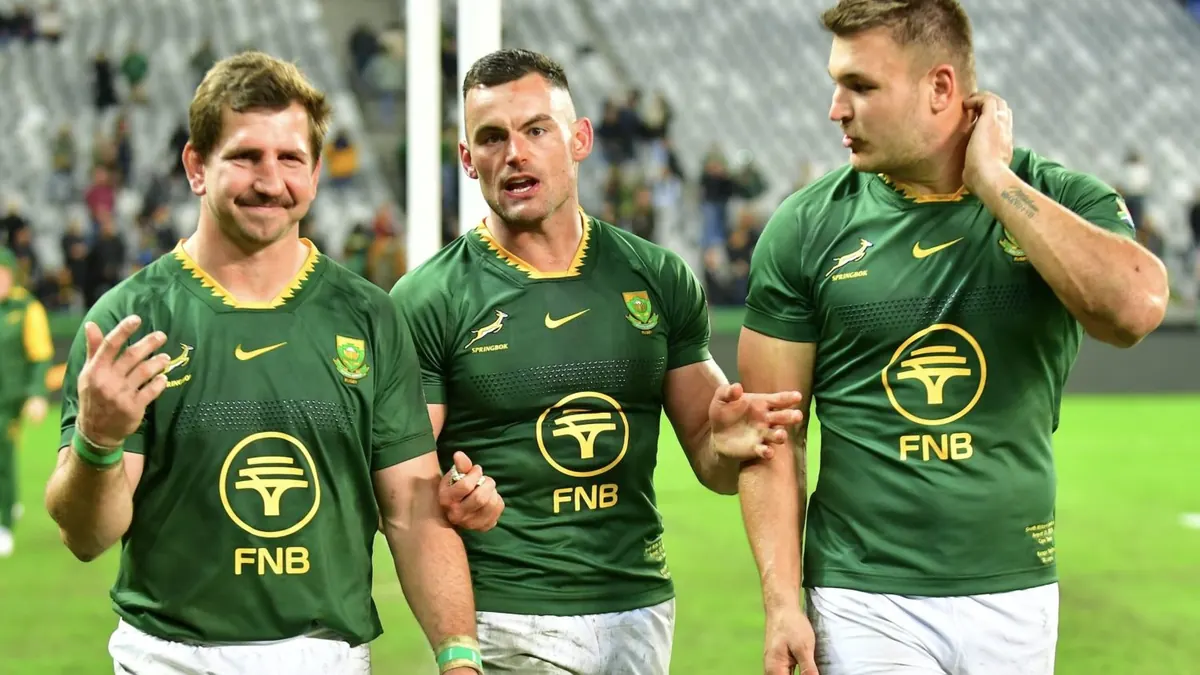
As the Springboks gear up for their upcoming fixtures in the Rugby Championship, the discussion around player roles and versatility within the squad has gained momentum. One of the most intriguing topics is the potential for centre Andre Esterhuizen to adopt a hybrid role, a sentiment echoed by loose forward Kwagga Smith. This exploration of positional flexibility reflects the modern demands of rugby, especially within a team that prides itself on tactical adaptability.
Kwagga Smith, who has made a name for himself as a dynamic loose forward, believes that Esterhuizens skill set could be effectively utilized in a hybrid capacity, allowing him to contribute both in the midfield and as an additional forward option on the field. Such a role could provide the Springboks with a strategic advantage, particularly in matches where physicality and ball-carrying capabilities are paramount. Esterhuizens ability to tackle and break through defensive lines could be pivotal in opening up play for the backline.
However, Smith notes that there is still an area in Esterhuizens game that requires refinement should he transition to a flank position. The ability to effectively link with forwards and facilitate quick ball movement is crucial in this hybrid role. With the Springboks facing increasingly competitive teams in the Rugby Championship, enhancing this aspect of Esterhuizens game could be vital for the teams overall performance.
The Springboks are currently positioned as one of the leading teams in international rugby, and the ability to adapt player roles could be a game-changer as they prepare for high-stakes encounters. The Rugby Championship not only presents an opportunity for the Springboks to solidify their dominance but also serves as a testing ground for new strategies and player combinations. The potential integration of Esterhuizen into a hybrid role could add a layer of unpredictability to their gameplay, making them even more challenging to defend against.
Moreover, the discussion around player versatility is particularly relevant in the context of the Springboks historic style of play, which often emphasizes a strong forward pack complemented by an agile backline. By experimenting with players like Esterhuizen in various positions, the coaching staff can create a more flexible game plan that can adapt to different opponents. This flexibility could be crucial as the Springboks aim to maintain their competitive edge on the global stage.
As the Rugby Championship unfolds, fans and analysts alike will be keen to see how the Springboks implement these strategic changes and whether Esterhuizen will take on this hybrid role. The evolution of player positions within the team could set the tone for their performance, influencing not only their immediate results but also their preparations for future international tournaments. With the stakes high, the Springboks will need every advantage they can muster as they strive for success in the coming matches.