Former Test referee Nigel Owens has sparked discussions in the rugby community with his recent comments regarding Ardie Saveas controversial tackle on Jasper Wiese during a match at Ellis Park. The incident has reignited debates about player safety and the enforcement of tackle laws within the sport. The clash occurred in a high-stakes encounter between the Springboks and the All Blacks, where both teams were vying for supremacy in their storied rivalry. Saveas hit on Wiese raised eyebrows, as many observers felt it could have warranted a more severe penalty. Owens, known for his keen insights and authoritative stance on rugby officiating, suggested that Savea was very lucky to escape without a harsher reprimand. In the context of rugbys evolving approach to player safety, Owens remarks highlight the ongoing challenge referees face in making split-second decisions during intense matches. The physicality of the game, especially in a fixture as fiercely contested as the one between South Africa and New Zealand, often leads to contentious moments that can be interpreted in various ways. With player welfare becoming a primary concern in rugby, the scrutiny of tackles like Saveas is likely to intensify. The significance of this incident extends beyond just the players involved. For South African fans, the Springboks performances against the All Blacks are always a focal point, given the historical and cultural weight of the rivalry. Matches between these two teams often serve as a litmus test for form and strategy ahead of major tournaments. As such, any contentious decisions or incidents can influence team morale and public perception. As the rugby community digests Owens comments, it serves as a reminder of the fine line referees walk in enforcing the laws of the game while ensuring the safety of the players. The International Rugby Boards continuous updates to the laws surrounding tackling and head contact reflect the sports commitment to adapting to modern safety standards, but they also invite ongoing debate. Looking ahead, the focus will likely shift to how teams and players adjust to these discussions, particularly in upcoming fixtures. Coaches and players alike will need to be conscious of the implications of high-impact tackles, as they prepare for the challenges that lie ahead in both domestic leagues and international competitions. The conversation surrounding player safety and officiating standards is sure to be a recurring theme as the rugby season progresses.
Owens Comments on Saveas Tackle Controversy
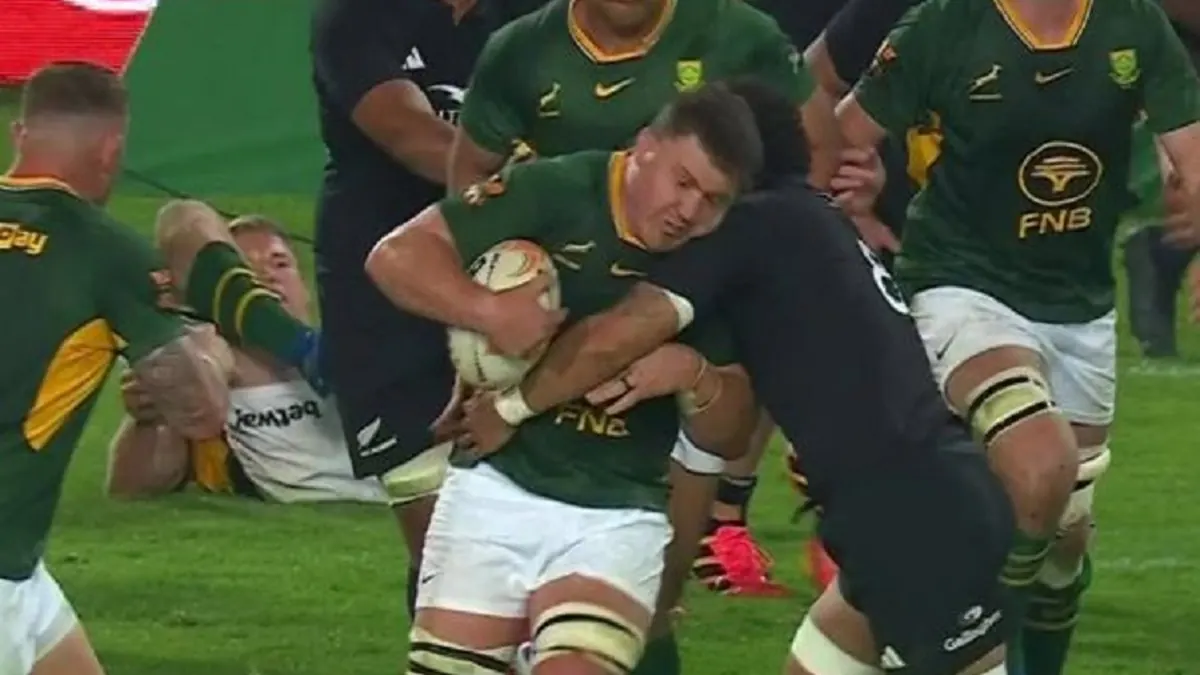
Former Test referee Nigel Owens has sparked discussions in the rugby community with his recent comments regarding Ardie Saveas controversial tackle on Jasper Wiese during a match at Ellis Park.