Steve Hansen and Nick Mallett have expressed their concerns over a significant communication breakdown during a recent rugby match in Perth. The incident, which involved referee Andrea Piardi using a cellphone to contact the Television Match Official (TMO), has drawn sharp criticism from both former coaches, highlighting the ongoing challenges faced in officiating at the highest level of the sport. The match in question, which has not been specified in the report, showcased the critical role that technology plays in modern rugby. Communication between match officials is vital for ensuring that decisions are made accurately and fairly. In this instance, the reliance on a cellphone to connect with the TMO raised eyebrows and sparked discussions about the protocols in place for such situations. Hansen, a former All Blacks coach, and Mallett, a renowned Springbok coach, both pointed to this incident as evidence of a broader issue within rugby officiating. For South African fans, this incident resonates deeply, especially given the Springboks recent performances on the international stage. The Springboks, who are preparing for upcoming Test matches, rely heavily on accurate officiating to maintain their competitive edge. Any disruption in communication between referees and TMOs can potentially impact the outcome of critical moments in matches, which is something both Hansen and Mallett stressed in their comments. Hansen emphasized that using a cellphone during a match is not only unprofessional but also undermines the integrity of the game. He argued that such scenarios could lead to confusion and mistrust among players and coaches, who depend on the consistency and reliability of match officials. Mallett echoed these sentiments, stating that rugby must uphold its standards, particularly when it comes to officiating and technology. The incident has sparked a wider conversation about the use of technology in rugby, particularly as the sport continues to evolve and adapt to modern demands. With the Rugby World Cup on the horizon, the need for flawless officiating is more crucial than ever. As teams prepare for high-stakes encounters, any ambiguity in decision-making processes could have significant ramifications. Looking ahead, the rugby community will be watching closely to see how governing bodies respond to this incident. Will there be a push for improved communication protocols? Will technology be reassessed to ensure that it serves its purpose effectively? As the Springboks and other teams gear up for their next challenges, the lessons learned from this episode will likely influence the way officiating is approached in future matches. The hope remains that such communication failures will be addressed promptly, allowing the game to maintain its integrity and excitement.
Concerns Over Rugby Officiating Breakdown
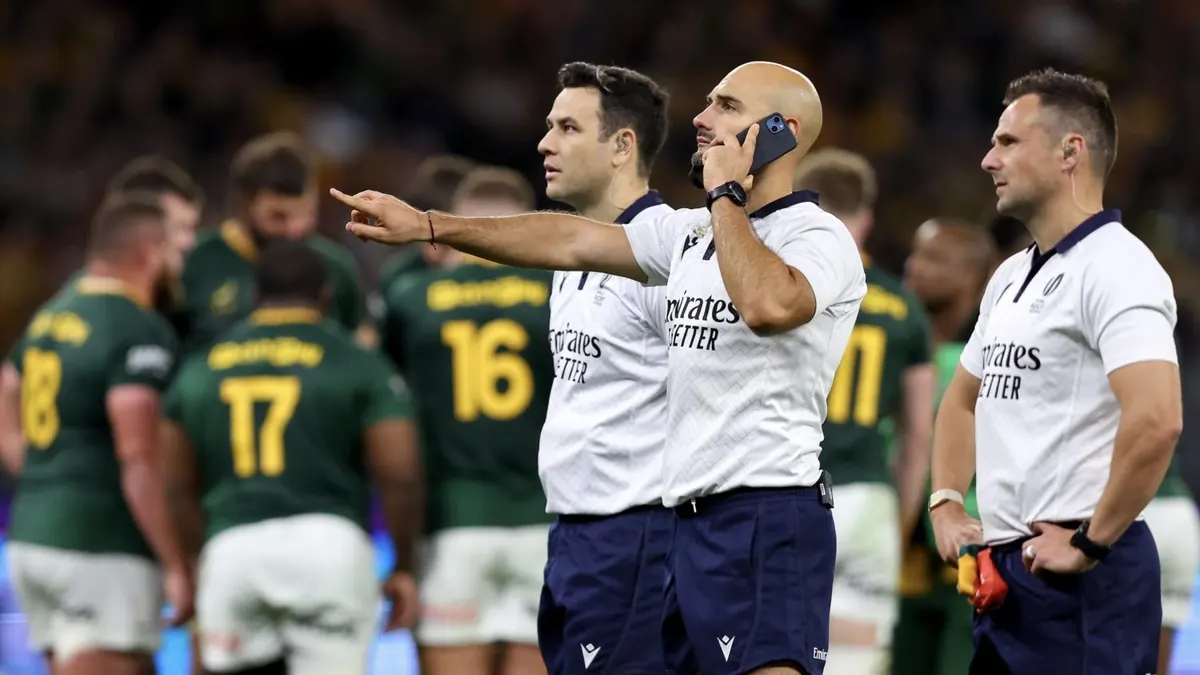
Steve Hansen and Nick Mallett have expressed their concerns over a significant communication breakdown during a recent rugby match in Perth.