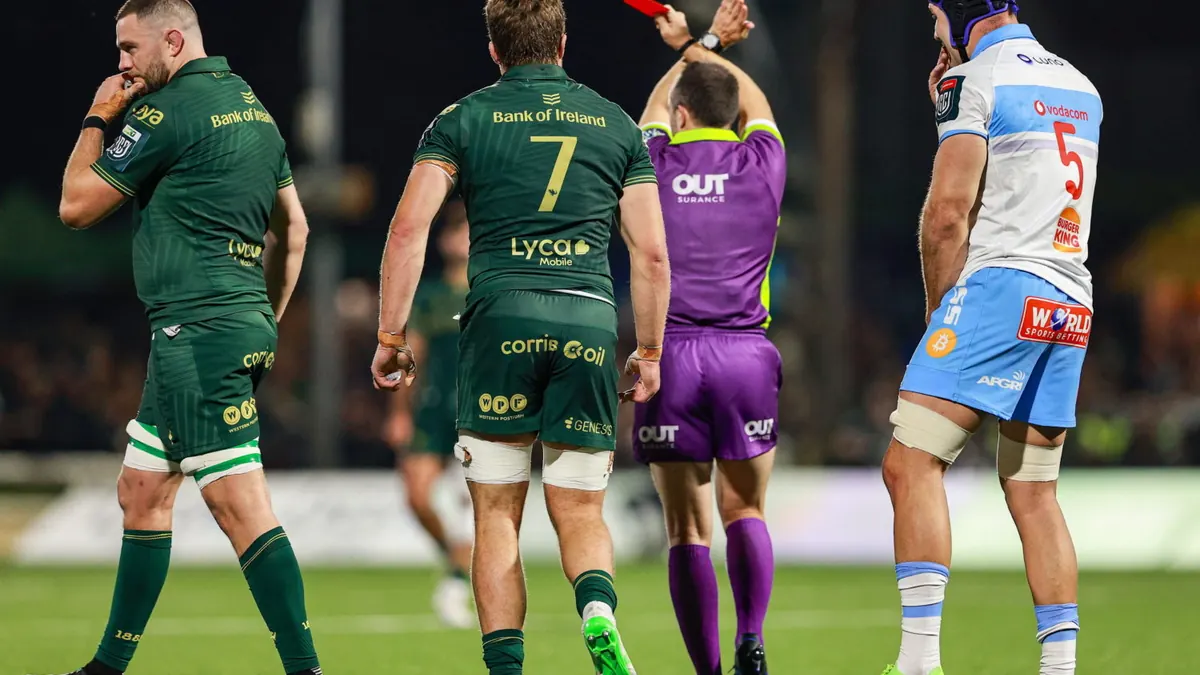
In a heated encounter during the United Rugby Championship (URC) clash between Connacht and the Bulls, the officiating decisions, particularly a contentious red card, have sparked significant debate among rugby enthusiasts and experts alike. The Bulls, representing South Africa in the competition, faced scrutiny not just for their performance but also for how the match was officiated by Scottish referee Mike Adamson.
Former Irish referee boss Owen Doyle has been particularly vocal, launching a scathing critique of Adamsons decisions during the match. Doyles comments highlight the growing frustration among fans and players regarding the consistency and clarity of officiating in the URC, a league that has been striving to establish itself as a premier rugby competition featuring teams from across Europe and South Africa.
The incident in question involved a red card that many believe was unwarranted, with implications that extended beyond the immediate match. Such decisions can significantly alter the dynamics of a game, especially in a tightly contested league where every point counts toward playoff qualifications. The Bulls, known for their physical style of play, found themselves at a disadvantage after the card was issued, forcing them to adapt their strategy on the fly.
For the Bulls, this match was not just another fixture; it was an opportunity to solidify their standing in the URC and gain crucial momentum as they look ahead to the knockout stages. The team has been working hard to improve their performance after a mixed start to the season, and a victory against a competitive side like Connacht would have been a significant boost. However, the controversy surrounding the officiating has overshadowed their efforts, leading to questions about how such decisions can impact a teams morale and confidence moving forward.
As the URC continues, the focus on officiating will likely intensify. With discussions on the need for clearer guidelines and better training for referees, the leagues governing body faces pressure to ensure that matches are decided on the field rather than by contentious calls. This situation is particularly pertinent for South African teams, who are keen to establish their dominance in a league that brings together diverse playing styles and strategies.
Looking ahead, the Bulls will need to regroup quickly as they prepare for their next fixtures. The lessons learned from the Connacht match, both on the field and in terms of how to handle adverse officiating scenarios, will be crucial as they aim to navigate the challenges of the URC. As the competition progresses, fans will be watching closely, not only for the performances of their teams but also for the evolution of officiating standards within the league.